One New Step, Learned at Fifty-Something
- andante
- a walking pace, counted aloud
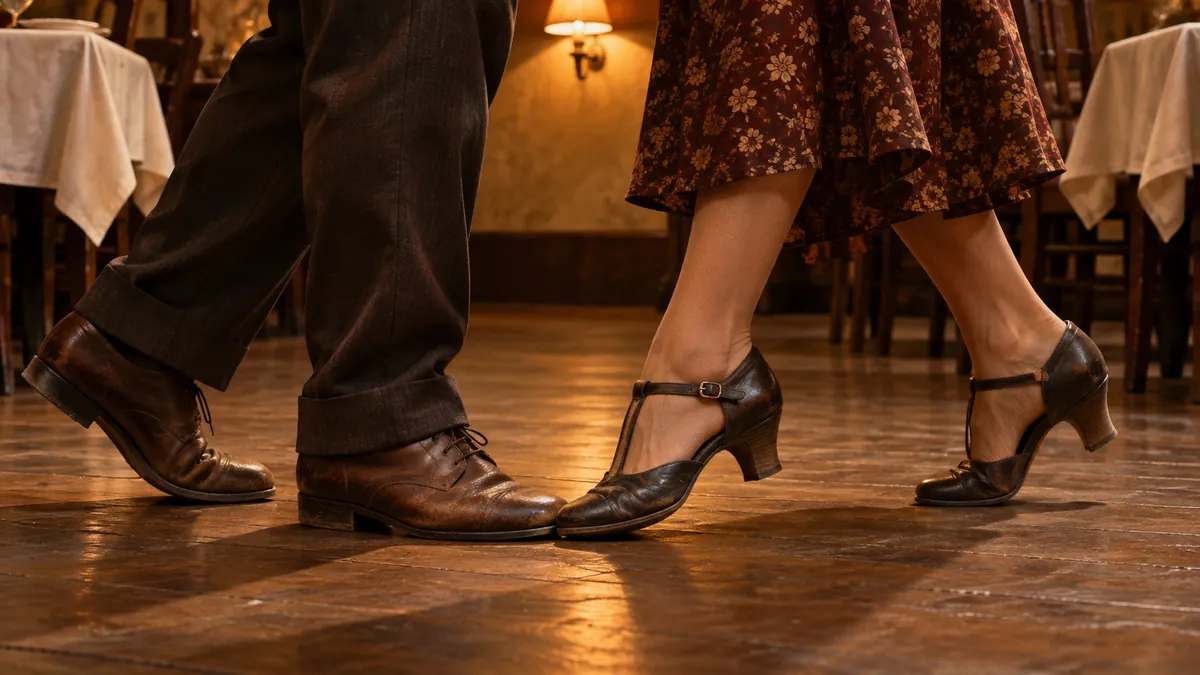
The second set at a music bistro usually bends toward slower numbers. The tempo drops, the floor between the tables opens up a little, and a couple who did not plan to dance ends up on their feet anyway. Watch them for a minute and you will see something worth copying: one of them is counting under their breath, lips moving, eyes on the other person's shoes.
Why a step is harder than it looks
Learning a short dance sequence asks for several things at once. You hold a count in your head, you remember which foot moves first, you keep track of where the other person is, and you listen for the beat so that all of it lands in time. None of those pieces is difficult alone. Together they fill the mind so completely that there is no room left for the grocery list or the email you forgot to answer. That full, absorbed feeling is what many people describe after an evening of trying something new with their bodies.
Researchers who look at learning later in life have been curious about activities like this, which blend movement, rhythm, sequence and company. The honest summary is that the studies are interesting rather than conclusive. The practical summary is simpler: a new step is a small, enjoyable puzzle, and a mind that gets regular puzzles tends to stay in the habit of solving them.
One step, not a whole dance
The trick is to shrink the goal. Nobody needs to learn a full routine. Pick one figure, a basic box step or a simple side-together-side, and give it a week. Say the count aloud in the kitchen while the kettle heats: one, two, three, pause. Walk it slowly, then at half speed with music, then at the tempo of a song you like. When you can do it while chatting, it has moved from the effortful part of your head into the easy part, and you are ready for the next one.
Write each step down once you have it, in plain words: which foot, which direction, how many counts. Reading that note a month later and finding that your feet still remember is a quietly satisfying moment.
Footing first
Practice on a floor you trust, in shoes that grip, near a counter or a chair back you can reach. Slow is fine. Wobbly is fine. Falling is not, so if balance has been giving you trouble lately, start seated, moving only the feet to the count, and work up from there.
The partner keeps half the memory
Dancing with someone splits the work. When you forget which way the turn goes, the other person's hand on your shoulder reminds you, and the next time you remember it on your own. Couples who learn together often end up with a private shorthand, a squeeze for left, a nod for the pause. That shared code is a little memory system of its own, built two people wide.
A month of steps, written on a card
Keep an index card in the kitchen drawer with one line for each week of the month. Week one, the basic box. Week two, the same box with a half turn. Week three, a side step that crosses behind. Week four, all three in a row, slowly, to a song you choose. At the end of the month, try the whole card without looking at it. Whatever your feet still know is yours; whatever slipped away goes back on next month's card with a small star beside it.
Nobody needs to watch. Plenty of people practice alone in the living room with the curtains drawn, which is a perfectly respectable way to arrive at the next music night with one more step than last time.